The Hidden Costs in Energy Contracts
Understand what can quietly increase costs if contract terms are not reviewed carefully.
Read article →Switching your business energy supplier isn’t about jumping ship for the sake of it. It’s about making the move at the right time — when it delivers the most value to your business.
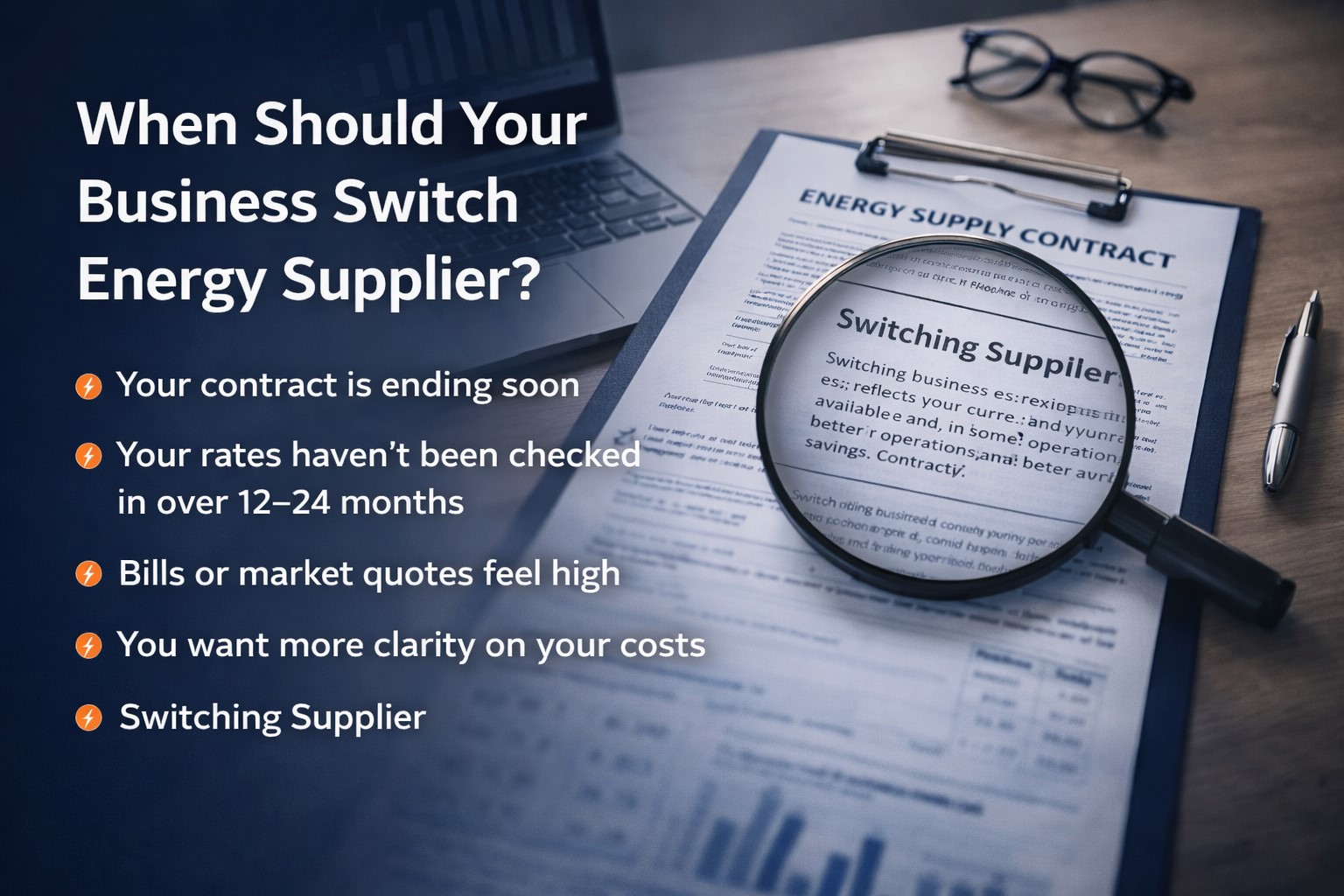
Get the timing right, and you can unlock significant savings. Get it wrong, and you could end up locked into poor rates or paying more than you should.
Every business energy contract includes a notice period. This is typically between 30 and 120 days before your contract end date.
This is your opportunity to:
Miss this window, and your options become limited very quickly.
If no action is taken, one of two things usually happens:
Neither scenario is ideal — and both are more common than most businesses realise.
A quick review can show whether you’re approaching a renewal window or already sitting on poor-value rates.
Check My Contract →The most effective approach is proactive. Start reviewing your contract 3–6 months before it ends.
This gives you:
Waiting until the last minute often limits your choices — and increases costs.
You don’t always need to wait for your contract to end. It’s worth reviewing early if:
In these cases, even a quick review can highlight opportunities.
This is one of the biggest misconceptions. In reality:
Switching is administrative — not operational.
The most effective businesses don’t just switch when they have to. They:
Energy shouldn’t be a reactive cost — it should be managed.
The difference between switching at the right time and the wrong time can be significant.
Most businesses don’t need to switch constantly. They just need to switch at the right moment.
If you’re unsure where you are in your contract cycle, Grid Hop can quickly assess it and guide your next move — no pressure, just clarity.
Get My Free Energy Review →