When Should You Switch Supplier?
Knowing when to act can make the difference between securing value and drifting onto poor-value rates.
Read article →On the surface, most business energy contracts look simple. A unit rate. A standing charge. A fixed term. But in reality, many contracts include hidden costs and clauses that quietly increase what your business pays — often without you realising.
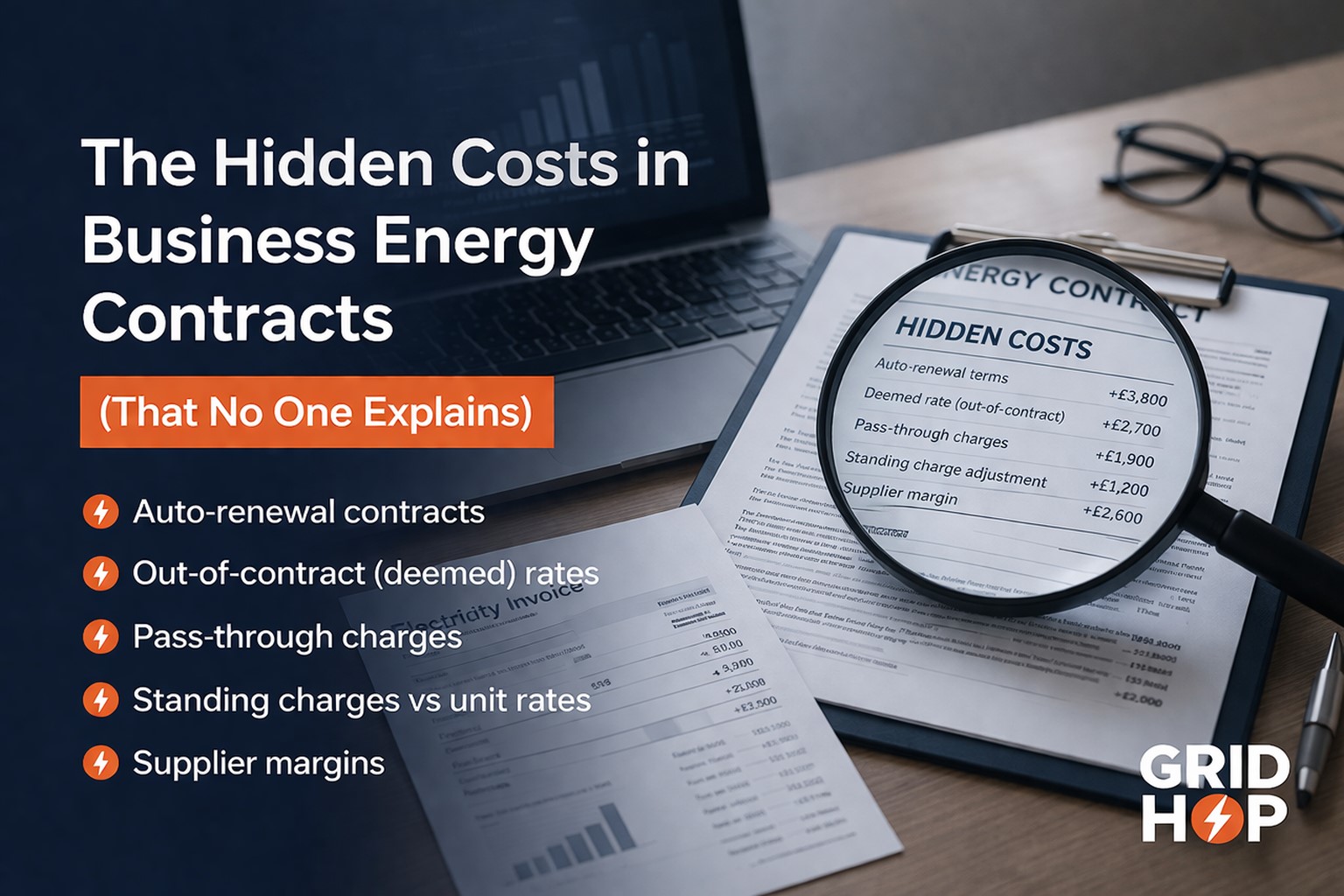
If you haven’t reviewed your contract recently, there’s a strong chance you’re being caught out by one or more hidden costs built into the agreement.
One of the most common — and costly — traps. If you don’t act within your contract’s notice window, suppliers can automatically roll you into a new agreement.
For many businesses, this happens without a conscious decision being made.
If your contract ends and no new agreement is in place, you’ll be placed on a deemed rate.
We regularly see businesses sitting on these rates for months, significantly increasing their costs.
Most businesses don’t realise until somebody reviews the contract properly.
Find Out →Not all costs are included in the headline rate. Many contracts include additional charges such as:
Without clear visibility, it becomes difficult to understand what you’re actually paying — and why.
A low unit rate can look like a good deal. But if the standing charge is high, your total cost may still be inflated.
It’s important to look at the overall cost structure — not just the headline rate.
Energy pricing isn’t always transparent. Margins can vary significantly between suppliers and contracts, and without comparison, it’s difficult to know if you’re getting a competitive deal.
Two businesses with similar usage can be paying very different rates — purely based on how and when their contract was agreed.
Individually, these costs might seem small. But over the life of a contract, they can add up to:
You don’t need to become an expert in energy contracts. You just need:
That’s where most businesses uncover immediate savings.
Hidden costs are easy to miss when they’re buried in renewal terms and supplier wording. We’ll help you understand exactly what you’re paying for.
Get My Free Energy Review →