The Hidden Costs in Energy Contracts
Understand the contract terms and charges that can increase costs without you realising.
Read article →Most businesses don’t have one major energy issue — they have several smaller inefficiencies that quietly build up over time. The good news is that many of these are straightforward to spot and quick to improve.
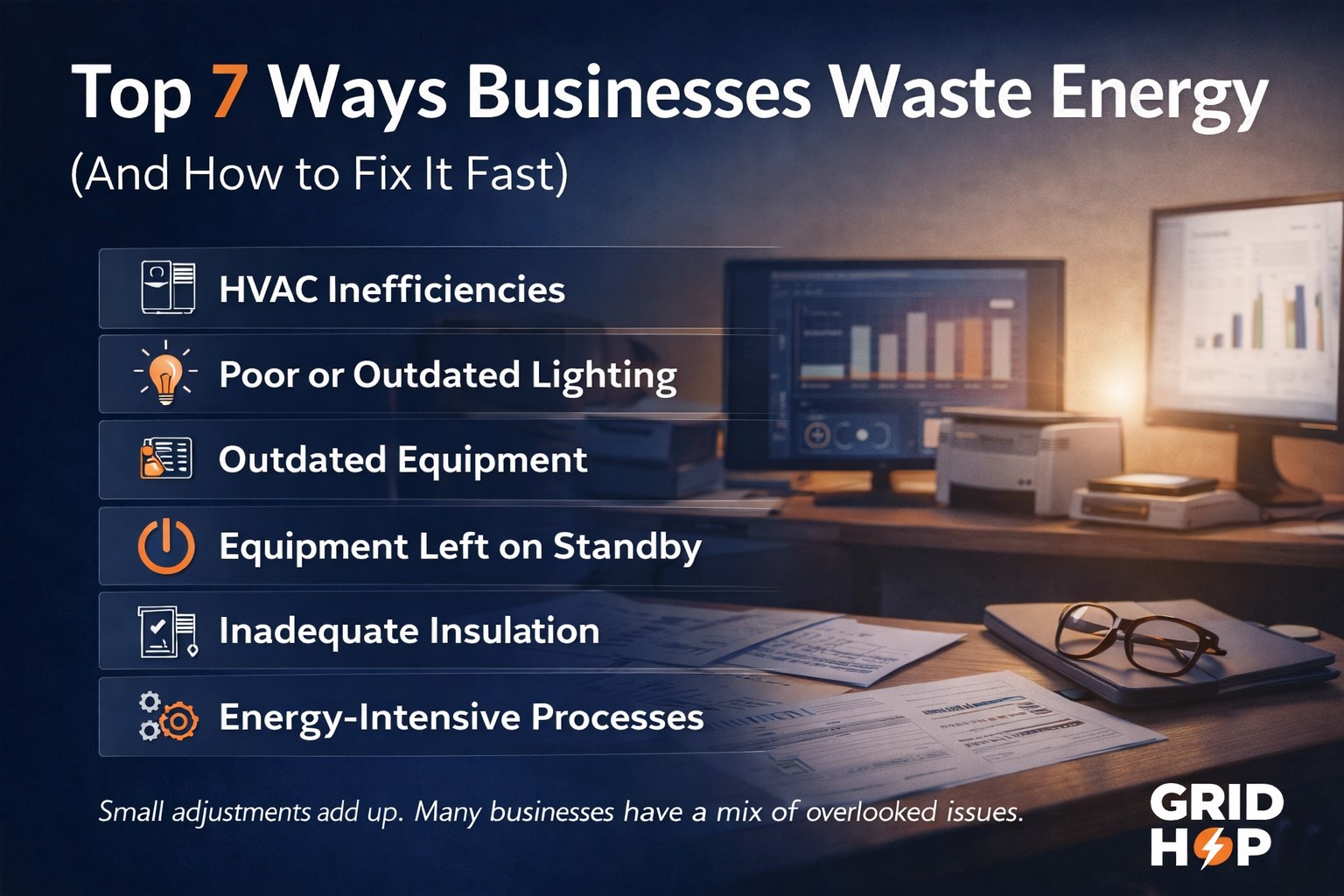
HVAC systems are one of the biggest energy users in most commercial spaces. Poor maintenance, incorrect settings, and systems running longer than needed can quickly inflate costs.
Offices, meeting rooms, storage areas, and communal spaces are often lit when nobody is using them. This might seem minor, but over weeks and months it adds up.
Computers, printers, screens, chargers, and other devices continue drawing power even when they’re not actively being used. Standby consumption is one of the most overlooked forms of waste.
Most businesses don’t realise how much avoidable spend is sitting in the background until somebody looks properly.
Check My Energy Spend →Older lighting systems can be far less efficient than modern alternatives. Businesses still using legacy fittings are often paying more than they need to for everyday lighting.
If warm air escapes easily, your heating system has to work harder to maintain temperature. The same applies in summer when cooled air is lost.
If you’re not tracking how and when energy is used, it becomes difficult to identify patterns, waste, or unusual spikes.
Even if your operations are fairly efficient, a poor-value contract can still mean you’re overpaying. Operational improvements matter — but so does what you’re actually being charged.
Most businesses don’t lose money through one dramatic issue. It’s usually a combination of smaller inefficiencies:
Together, these can add up to a significant unnecessary overhead.
Start with the basics:
Quick wins often come from simple visibility and small changes — not complex overhauls.
Grid Hop can help highlight where avoidable costs may be creeping in — both in how you use energy and in what you’re being charged for it.
Get My Free Energy Review →