When Should You Switch Supplier?
Timing your switch properly can be the difference between securing value and rolling onto higher rates.
Read article →Choosing the right energy contract isn’t just about price. It’s about how your business manages risk, plans costs, and responds to the market. One of the most common questions we hear is: should we go fixed, or flexible?
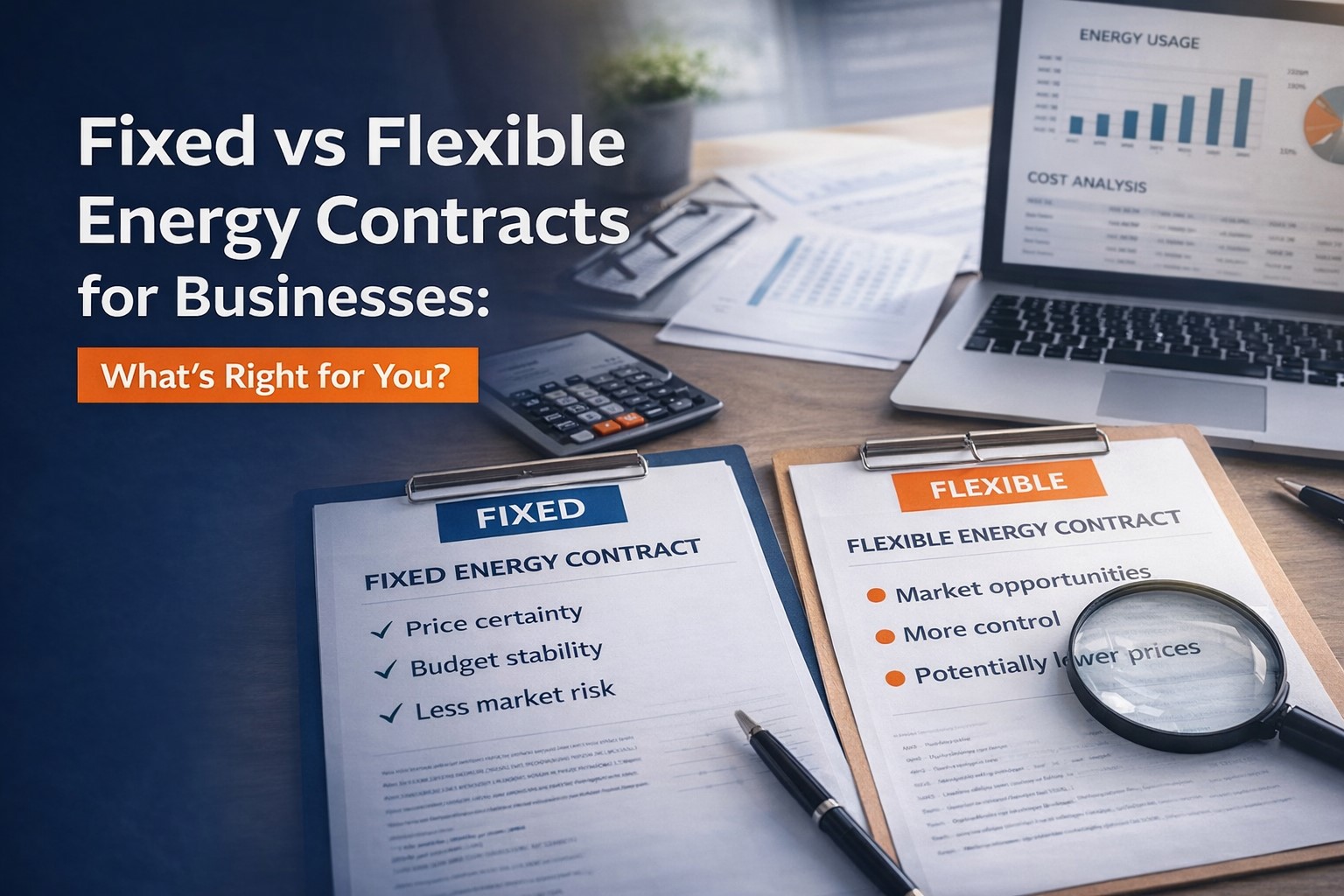
A fixed contract locks in your unit rate for a set period, typically 1–3 years.
Benefits can include:
Considerations can include:
For many businesses, fixed contracts provide stability and predictability — especially in uncertain markets.
A flexible contract allows you to purchase energy in stages, rather than locking everything in at once. This means you can respond to market movements over time.
Benefits can include:
Considerations can include:
Flexible contracts are typically used by businesses wanting a more strategic, hands-on approach to procurement.
A quick review can tell you whether your current setup matches your risk appetite and business needs.
Review My Contract →At a high level:
The right choice depends on how your business balances those two.
There’s no one-size-fits-all answer, but here’s a simple guide:
Fixed contracts may suit you if:
Flexible contracts may suit you if:
In reality, many businesses don’t actively choose between fixed or flexible. They renew what they already have, stick with the same supplier, or make decisions under time pressure.
That often leads to missed opportunities — either paying more than necessary, or taking on risk without fully realising it.
Rather than defaulting to one option, the best approach is to:
Energy shouldn’t be a reactive decision — it should be a considered one.
If you’re unsure whether fixed or flexible is the better fit, Grid Hop can break it down clearly and help you make an informed decision — no pressure, just clarity.
Get My Free Energy Review →